
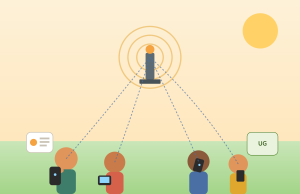
 Uganda has made real strides toward becoming a digitally connected nation. Mobile money has reshaped how people move money. Government services are slowly migrating online through platforms like the National Backbone Infrastructure and e-GP procurement systems. Smartphone penetration keeps climbing in cities and, increasingly, in rural trading centers. Yet for all this progress, a full digital transformation remains out of reach — and the reason is not primarily about cables, towers, or servers. It’s about people. Specifically, it’s about digital literacy.
Digital Transformation Is Not Just Infrastructure
There’s a common assumption that digital transformation is achieved once the infrastructure is in place — once fiber reaches a district, once a government portal goes live, once a bank rolls out an app. But infrastructure without the skills to use it meaningfully is like building a highway nobody knows how to drive on. A farmer in Kiboga with a smartphone but no idea how to check market prices online, verify a mobile money transaction, or spot a scam SMS is technically “connected” but not digitally empowered.
True digital transformation requires three things working together:
- Access — devices, electricity, and affordable internet
- Skills — the ability to use digital tools safely and productively
- Trust and relevance — confidence in the systems, and content/services that actually matter to people’s lives
Uganda has made the most progress on the first pillar. The second and third are where the gaps show.
What Digital Literacy Actually Looks Like
Digital literacy isn’t just “knowing how to use a smartphone.” It’s layered:
- Basic operational skills — turning on a device, navigating apps, typing, connecting to Wi-Fi or mobile data
- Functional skills — using email, mobile money, government e-services, online banking
- Critical/safety skills — recognizing phishing attempts, understanding data privacy, verifying information before sharing it, protecting passwords and PINs
- Creative and economic skills — using digital tools to create content, market products, freelance, or build a business online
Most digital literacy efforts in Uganda — and across much of the region — stop at the first level. People learn to tap and swipe, but not to protect themselves online, evaluate information critically, or use digital tools to generate income. This is a significant gap given how much economic opportunity now lives online.
Where the Gaps Are Widest
Rural-urban divide. Kampala, Entebbe, and other urban centers enjoy far better connectivity, device access, and training opportunities than rural districts. A student in a rural secondary school may never touch a computer before sitting a national exam that increasingly assumes digital familiarity.
Age and gender gaps. Older Ugandans and women — particularly in rural areas — consistently show lower digital literacy rates than younger men in urban areas. This isn’t a coincidence; it reflects unequal access to schooling, smartphones, and time freed up from domestic and care responsibilities.
Language and content barriers. Much digital content and many interfaces are in English, which excludes a portion of the population that would benefit most from local-language digital services.
Cost of data. Even where devices exist, the cost of mobile data relative to income remains a real barrier to consistent, meaningful use — not just occasional use.
Teacher and instructor capacity. Schools and vocational institutions cannot teach digital literacy well if the teachers themselves were never trained. This is arguably the most under-addressed gap of all.
What It Would Take for Full Transformation
For Uganda to move from “digitally present” to “digitally transformed,” a few things need to happen in parallel:
- Curriculum integration from primary school onward, not as a standalone ICT subject but woven into how students research, write, and problem-solve
- Community digital literacy hubs, especially in rural trading centers, that go beyond basic device use to cover safety, mobile money literacy, and productive use for farming, trade, and small business
- Local-language interfaces and content for government and financial services, so literacy isn’t gated by English fluency
- Targeted programs for women and older adults, who are too often an afterthought in national digital strategies
- Teacher training pipelines, since scaling any of the above depends on having enough capable instructors
- Affordable data policy, because no amount of training matters if people can’t afford to stay online consistently
- Public-private partnerships between telecoms, banks, government, and NGOs already active in this space (like those running digital skilling programs in partnership with mobile network operators)
The Bottom Line
Uganda doesn’t lack ambition or infrastructure investment — it lacks a systematic, well-funded push to build digital skills at the same pace as digital access. A phone in every hand means little if the hand holding it doesn’t know how to use it safely, critically, and productively. Digital transformation isn’t a technology story; it’s a human capacity story. Until digital literacy is treated as core infrastructure — as essential as the fiber in the ground — Uganda’s digital transformation will remain partial, uneven, and concentrated in the hands of those who already had an advantage.